
 Add as a preferred source on Google
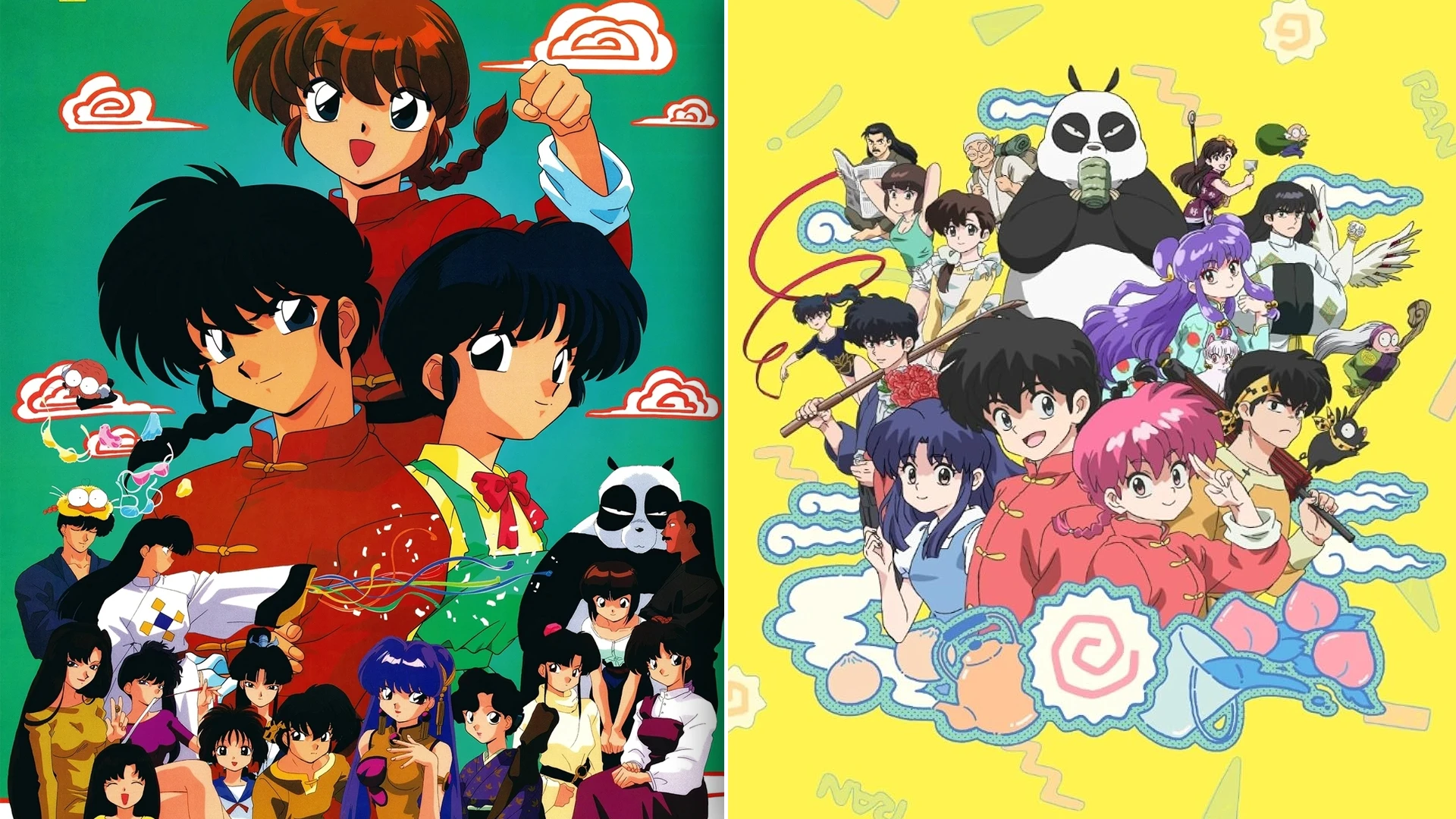
Remakes in anime that reinvent the magic of classic shows are far from a new trope. With successful anime remakes, studios capture the source material and shed light on the author’s perception rather than padding it up with a lot of fillers. Rumiko Takahashi’s Ranma ½ is a prime example of those mentioned above.
The story is about Ranma Saotome, a sixteen-year-old martial artist who switches genders every time he touches water. Although the manga was published on Aug. 5, 1987, Studio MAPPA’s currently airing remake managed to incorporate modern elements into a premise that dates back several decades ago.

With that in mind, let’s explore 10 More Anime Remakes That Completely Redefined Classics!
Kazuhiro Fujita’s ‘Ushio & Tora’ Perfectly Rebuilds the 90s Shonen Manga

16-year-old Ushio Aotsuki is a non-believer of supernatural beings despite his father’s priest background. However, he is forced to be stuck with a large beast after he accidentally unseals a spear that used to imprison Tora, the Yokai.
The manga was published in Weekly Shonen Sunday on Feb. 10, 1990. 33 volumes later, the franchise came to a close in 1996. The initial OVA adaptation of the manga was aired on Sep. 11, 1992. Although the show gained traction, Ushio & Tora failed to captivate audiences the way Yu Yu Hakusho did, which also aired during the same year, as it suffered from animation that has not aged well, and was not as enthralling as it could be.
However, MAPPA and Studio VOLN stepped in to rebuild the perfect remake for Ushio & Tora. From mesmerizing combat scenes to a noticeably better pace, the 2015 remake of Kazuhiro Fujita’s classic Shonen manga had it all.
Dororo’s 2019 Anime Remake Modernizes Osamu Tezuka’s Original Story

Lord Daigo Kagemitsu renounces his religion and makes a pact with demons who grant his wish of wanting to bring life to his dying land. However, this came with a price as he was cursed with his first child being born with every sense of his body taken away. After disposing of him, the boy, who is later named Hyakkimaru tags along with a child namely Dororo, and hunts the demons who took him as a sacrifice.
The manga was published in 1967 and is one of Shonen’s classics. An anime adaptation namely Dororo to Hyakkimaru was later screened in 1969. Although the show was received well for its time, Tezuka Productions and MAPPA’s 2019 adaptation popularized the show in the international anime community. The world-building, soundtrack, and animation were leveled up compared to the original TV adaptation.
Trigun Stampede Deviated From its Original Source Material
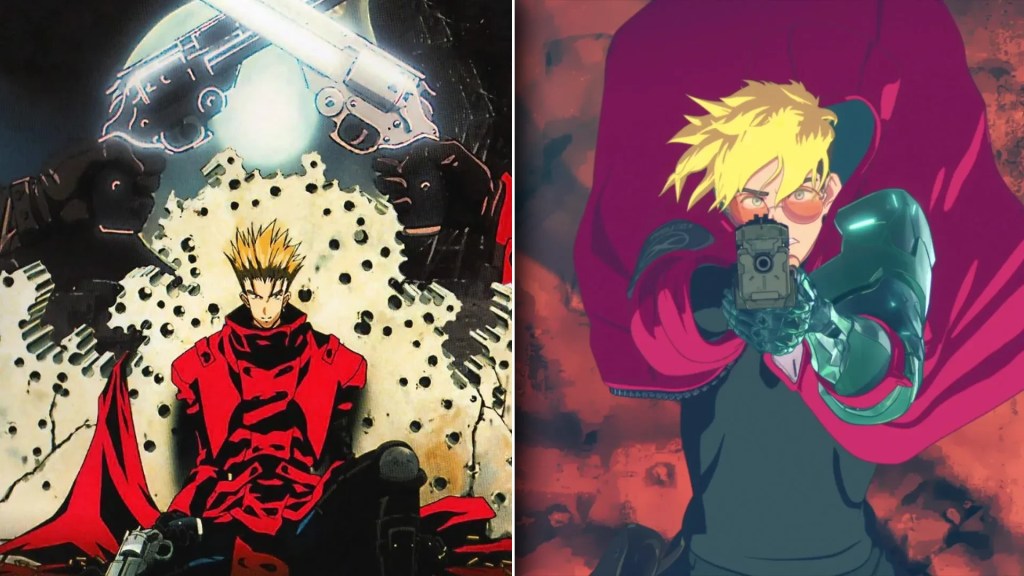
Yasuhiro Nightow’s Trigun followed Vash the Stampede in No Man’s Land, as he dodges goons who attempt to capture him for the $60,000,000,000 bounty on his head. Rather than the evil monster that they claim he is, Vash is an unassuming gunman who is far from violent. The 1998 adaptation produced by Madhouse is one of the most memorable anime from the 90s, that the retro fans grew up with.
However, Trigun Stampede does not follow the original source material. With faster pacing and a small deviation from Yasuhiro’s storyline, the 2023 adaption produced by Studio Orange was surprisingly received well among fans of the classic show.
Hellsing Ultimate Straightened Out the Problems in Hellsing

Rebel Vampire Hunter Alucard, works as an assassin for the Hellsing Organization, a group specialized in wiping out threats that plague humanity. Kouta Hirano’s 1997 published manga series follows Alucard and his adventures in defeating said monsters who terrorize the England-based Hellsing.
Unlike the original Hellsing(2001), Hellsing Ultimate delves into the complex relationship of Alucard, his assistant Seras Victoria, and the head of the organization Sir Integra Fairbrook Wingates Hellsing. With episodes that span close to an hour, the 2006 OVA remake done by Madhouse does an exceptional job of storytelling, adding gruesome fights and a noteworthy soundtrack.
Fruits Basket is one among the few Anime Remakes Stayed Faithful to the Manga

A hopeful girl turned homeless, Tooru Honda keeps her life as a vagrant girl hidden. Living in a tent that resides on the private property of the Souma family, they eventually find out her hidden secret. She also soon discovers the secret of the Soumas when she finds out that they are an anomaly. Whenever they hug a member of the opposite sex, they are transformed into an animal of the Chinese Zodiac.
Although the 2001 adaptation was loved, the anime remake was praised for following the manga, unlike the original. TMS Entertainment’s 2019 remake stayed true to its material, as it showed the character dynamics of how Natsuki Takaya intended it to be. With three seasons, Fruits Basket fully embraced its Shoujo element which made the remake way better than the original.
Dragon Ball Kai is the cleaner version of Dragon Ball Z

As iconic and memorable Dragon Ball Z was in the 90s, Akira Toriyama’s storyline was not perfectly captured in the classic TV show. Besides that, the Toei Animation original was packed with horrendous pacing, with certain power-ups lasting longer than they needed to be. The problems with Shonen and filler episodes were birthed with shows like Dragon Ball and Dragon Ball Z.
However, Dragon Ball Kai perfected what Dragon Ball Z failed to do. With a significantly decreased amount of filler episodes, Kai managed to stick to Akira Toriyama’s source material. The evergreen Frieza Saga, Cell Saga, and the Buu Saga were refined with stronger pacing and more than one season that panned the entire storyline flawlessly.
The Anime Remake of Devilman Crybaby Displayed a Gruesome Side Compared to the Original

Sabbath is an unspeakable party that is attended by degenerates, where debased activities take place. That is where the unassuming Akira Fudou, alongside his childhood friend Ryou Asuka visits to uncover the truth about demons. In an unexpected turn, Akira accidentally contracts with the Devil Amon and becomes a hybrid. It is now up to him and Ryou to demolish demons who terrorize humanity including his loved ones.
Go Nagai’s manga Devilman was published in 1972. The TV adaptation produced by Toei Animation titled Devilman(1972), saw success in the early days. However, Science SARU’s 2018 adaptation put the franchise on the map, with its gruesome details, better pacing, and beautiful soundtrack that fit the tragedy of the premise. Although it retells the original show, Devilman Crybaby modernized the old tale and perfected it so fans of new-age anime could digest it.
Yoshihiro Togashi’s Hunter x Hunter Anime Remake is a Polished Version of the 90s Adaptation

Ambitious in finding his father Ging Freecss, 12-year-old Hunter Gon Freecss, alongside his friends Killua, Kurapika, and Leorio come across various tasks that put their lives in danger. Often known to many as one of the best Shonen franchises of all time, Yoshihiro Togashi’s Hunter x Hunter is an ongoing manga that started its serialization on Mar. 3, 1998.
The manga had its TV adaptation that was produced by Nippon Animation in 1999. Fans’ overall perception of the show is good, however, the 90s anime adaptation stops at Greed Island, with aspects of it not aging well by today’s standards.
The Hunter x Hunter 2011 remake by Madhouse is a perfection of Yoshihiro Togashi’s manga series. Avoiding filler episodes, employing Yoshihisa Hirano for the soundtrack, and diving into the world of Chimera Ants, the remake is a far better show among fans’ with a reach that spanned across non-anime fans, who also adore the show.
Fullmetal Alchemist: Brotherhood Perfected What the Original Failed To Do
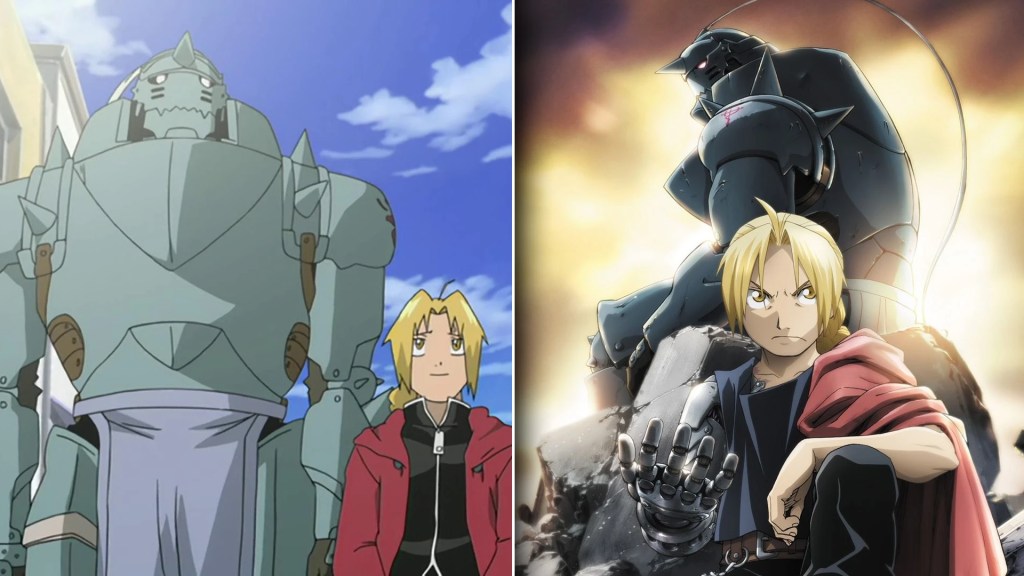
Hiromu Arakawa’s Fullmetal Alchemist follows the tragic story of the Elric brothers, Alphonse and Edward, who embark on a journey to find the Philosopher’s Stone, in order to get their missing body back. The manga began its publication in 2001 and ended after a span of 27 Volumes.
During the serialization of the 2002 Fullmetal Alchemist adaptation, the manga did not enter its peak. Therefore, the original TV show was padded with an unfaithful storyline and poor pacing. In the Studio Bones remake titled Fullmetal Alchemist Brotherhood, every aspect of sound design, pacing, and animation was perfected. The 2009 adaptation left no crumbs as it stayed at the top of every anime list for over a decade. It was also concluded with a comprehensive ending that perfectly closed the chapter on Hiromu Arakawa’s masterpiece.
JoJo’s Bizarre Adventure is the Quintessential Perfection of Anime Remakes

Hirohiko Araki’s JoJo’s Bizarre Adventure stands strong as one of the most sustainable franchises in the industry. Making its debut in 1986, it is an ongoing manga with several parts and more to come. After the release of Stardust Crusaders in 1989, a TV show adapting the manga was published, gaining little to no notoriety.
However, Fall 2012 witnessed the breakthrough of JoJo’s Bizarre Adventure with David Productions perfecting the outlandish aspects of Hirohiko Araki’s imagination. Since then, the rise of the Joestars has been unbeatable with later parts such as Diamond is Unbreakable, Golden Wind, and Stone Ocean releasing consecutively.
David Production’s JoJo’s Bizarre Adventure perfected what the 90s adaptation failed to achieve. The Anime remakes did not shy away from displaying the peculiar details, assembling the perfect team of animators and artists to have an exemplary soundtrack, airing on Netflix.

Sunil is a passionate content writer with experience at Pinkvilla and FirstSportz, where he honed his skills in delivering engaging and dynamic stories. A lifelong anime fan, he draws inspiration from classics like Bleach and Rurouni Kenshin, weaving their themes of heroism and adventure into his work. Sunil’s deep love for anime and storytelling makes his writing as impactful as Ichigo’s Bankai.
Leave a Reply