

 Add as a preferred source on Google
The manga begins with the eccentric, grumpy yet nonchalant protagonist Ichiro Yaso, a piano prodigy, who has given up on his passion until he receives a wake-up call (both existentially and literally) one fine morning. After deciding to extend his summer vacation and skip class for the new school term, he proceeds to the convenience store where he works part-time, to grab breakfast, only to attend to the perceived first customer, Ludwig van Beethoven, in the flesh.
After a classic animated hashout, they both come to terms with the situation i.e. Yaso accepting that this is the real music maestro himself fast-forwarded 200 years after his era, and Beethoven accepting that he came back to life without his ailments for a certain purpose. Upon Beethoven’s request, Yaso takes him to play on a piano where they run into Yaso’s music peers. Based on their conversations with Yaso, he gave up on the piano after a certain incident during a competition despite his natural talent and passion.
They challenge his decision by asking him to play and unbeknownst to them, Beethoven concurs and eggs Yaso on hinting at his own trauma-turned-talent. After Yaso’s riveting performance with Beethoven of the Fifth or Fate Symphony complete with applause, Beethoven explains to Yaso in eloquent monologue about how his return may be to perform the vicarious swan song of his legacy – mentoring Yaso.
Star of Beethoven PV.
— Shonen Jump News (@WSJ_manga) February 9, 2025
Series just launched in Weekly Shonen Jump Issue #11. pic.twitter.com/bdbeKq41Bg
How the Star of Beethoven Captures the Power of Music and Fate
The manga cuts to the chase by introducing and entwining the fates between Beethoven and Yaso or running into his music peers by coincidence. Though manga plots often have uncanny turns of fate, it’s both abrupt and refreshing to see a plot that doesn’t drone on and bury the lead. We also get a preliminary idea about Yaso’s reason for giving up on playing the piano, though we have yet to discover the historical accuracy of Beethoven’s life and personality.
The best part of the first chapter is how Yaso and Beethoven’s passion for music can be heard and felt through the manga’s expressive, allegoric depictions. Even if you are not familiar with classical music, we unconsciously know the iconic Beethoven symphony and find it playing in our heads after the ‘Da Da Da Dah..’.
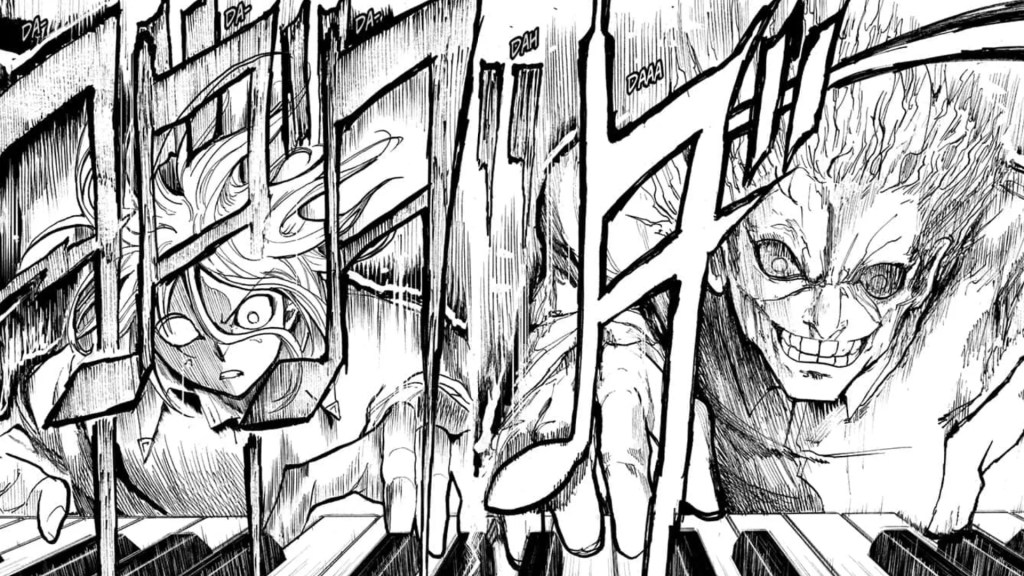
The exposition of this chapter may resonate with many of us as we live in times where passion has become a reluctant tool to make ends meet, usually a lucrative end. Yaso and Beethoven’s plot pain point of channeling the depths of their life’s despair through a creative outlet can be compared to our own life’s frustrations seeking a means to transcend beyond that.
While the Star of Beethoven is already being compared to the super successful classical musical plotline – Your Lie in April; this manga might provide its own crescendo to the genre thanks to its random fun facts, comical expressions, and deeply passionate twists. Other notable works to check out in this genre are Nodame Cantabile and Ao no Orchestra.
Background Score on Ludwig van Beethoven

With several hints dropped about Ludwig van Beethoven’s experiences in the manga, let’s get to know his life better.
Born on December 16th, 1770 in Bonn, Germany, Ludwig showcased musical talent at a very early age. Under the harsh guidance of his abusive father, Johann van Beethoven, Ludwig was coerced to practice playing the piano leading him to perform publically by the tender age of 8. By 12, he began financially supporting his family with earnings from composing music and playing the organ.
Moving to Vienna at 21 and studying with Haydn, he gained a reputation as a virtuoso pianist. But by 26, he slowly began losing his hearing but managed life with the assistance of his fickle acquaintance, Anton Schindler.
Despite going deaf, Ludwig played hard to compose music using the vibrations of the instrument which explains the dramatism of the Fifth or Fate Symphony. He continued his musical career until he went completely deaf by 45 and passed away at 57 after battling several illnesses.
Immortalized by his music, Ludwig has become one of the most prolific German composers and pianists in Western music with inspirations drawn from the Classical and Romantic eras.
Historians carefully distinguish between the fact and fiction of Ludwig’s records and possessions as many were destroyed, altered, renamed, and stolen by Anton, after the maestro’s death.
Read Star of Beethoven on Mangaplus

I am a freelance content specialist and brand strategist with over 13 years of international experience and a decade more of being an anime otaku. My favorite animes of all time are the big 3 – One Piece, Naruto, and Bleach (only the manga); Kino’s Journey, Cowboy Bebop, Natsume’s Book of Friends, Eyeshield 21, with some recent faves being Apothecary Diaries, Link Click, Bungo Stray Dogs, and Uramichi Oni-san. I am particularly interested in the Slice of Life, Action, and Iyashikei genres. I am quite a Japanophile and after traveling to Japan, I believe the country deserves its own planet. I also have an MA in Media & Cultural Studies and have written for several industries, including wellness, F&B, sustainability, travel, and e-commerce.
Leave a Reply