

 Add as a preferred source on Google
With the 3rd season now live, Jujutsu Kaisen is set to take over the world with its grief, intimacy, madness, and decay-filled Culling Games arc. But before that, the series has turned heads with many easter eggs in its opening theme video. Instead of flashy symbolism, the visuals borrow emotional language from fine art.
These arts make you want to experience Culling Games before you understand it. Apart from serving as Easter eggs for art nerds, these paintings also act as a reference point to understand what goes on with the participants in the Culling Games. Let’s break down how each artwork is visually and thematically represented in JJK Season 3 opening.
SPOILERS AHEAD!
1. Dead Mother by Egon Schiele

Schiele’s painting depicts a lifeless mother clinging to her child, which gives us a feeling of both attachment and loss. Jujutsu Kaizen brilliantly depicts the same feeling, the opening sequence showing our protagonist Yuji Itadori, who is shown in a baby form, held by his mother. But here’s the interesting part: his mother has weird stitches on her forehead. This indicates that she is controlled by Kenjaku, which raises many questions about Itadori’s past.
2. Two Sleeping Children by Paul Rubens
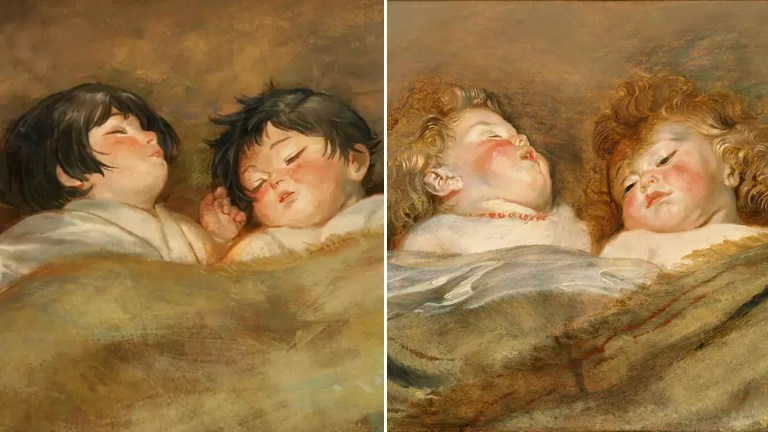
Rubens’ work with the two sleeping children radiates warmth, innocence, and vulnerability. Jujutsu Kaisen uses these feelings, showing the Zenin sisters Maki and Mai sleeping together, reflecting almost gentle shots of characters at rest or suspended in stillness, giving a sense of peace among the chaos in the world.
3. Camille Monet and a Child in the Artist’s Garden in Argenteuil by Claude Monet
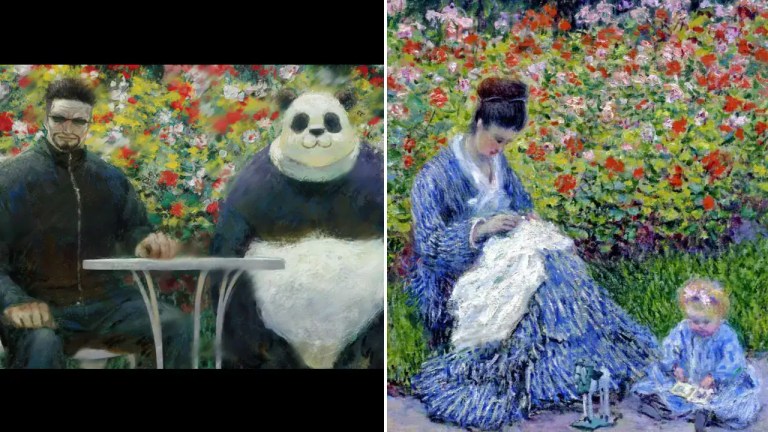
This painting captures domestic serenity and fleeting happiness. The image mirrors its soft composition through sunlit visuals and gentle movement early on. Here, Jujutsu Kaisen shows Panda and Principal Masamichi Yaga, showing the bond and relationship that they have over the years.
4. The Scream by Edvard Munich
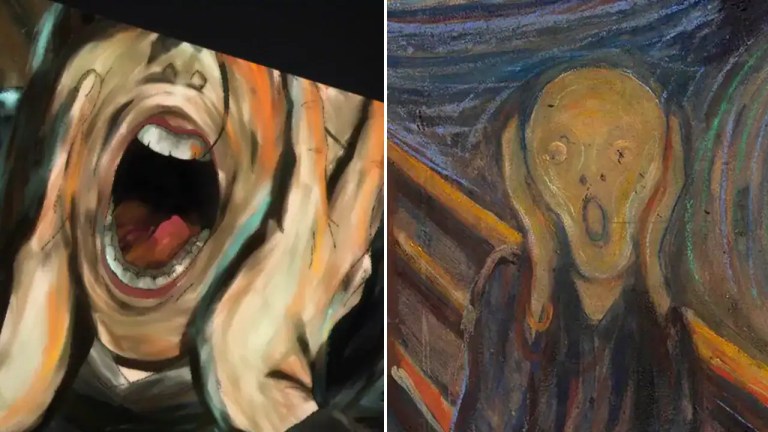
The opening also brings in Edvard Munch’s “The Scream”, displaying a distorted horror which is linked with the Zenin twins’ mother. The art displays a suffocating panic, which is reflected in a woman who is crushed by fear and helplessness, which ultimatley go through emotional abuse. Such emotions perfectly reflect Maki Zenin’s character growth, where she is forced to confront her mother, not in terms of their relationship, but as a broken product, discarded by the Zenin Clan.
5. The Kiss by Gustav Klimt
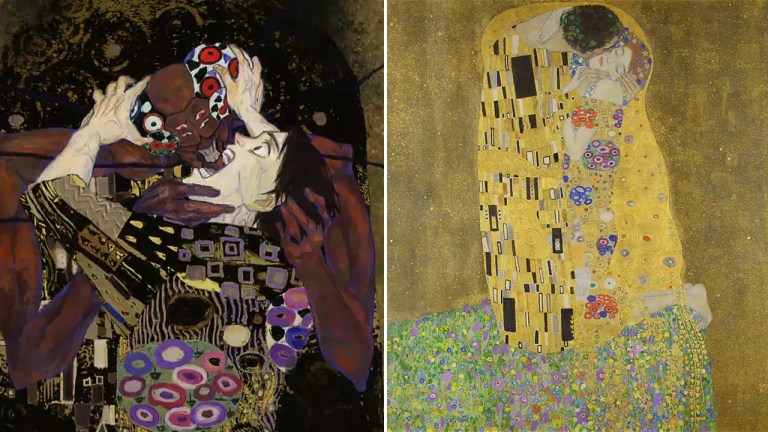
Klimt’s painting romanticizes intimacy, but also traps figures in ornamental gold. The kiss shown in the original art represents devotion and unity in the purest form, whereas for JJK, this is intentionally distorted. The closeness shown between Yuta and the cursed spirit Kurourushi goes beyond affection; it’s a representation of annihilation itself. While the story on the surface shows a different side, it also reminds us of Yuta’s terrifying composure, turning the most tender love into an ultimate weapon.
Also Read: The 8 Rules of the Culling Game in Jujutsu Kaisen Explained
6. Kashiwade no Hanoshi by Utagawa Kuniyoshi
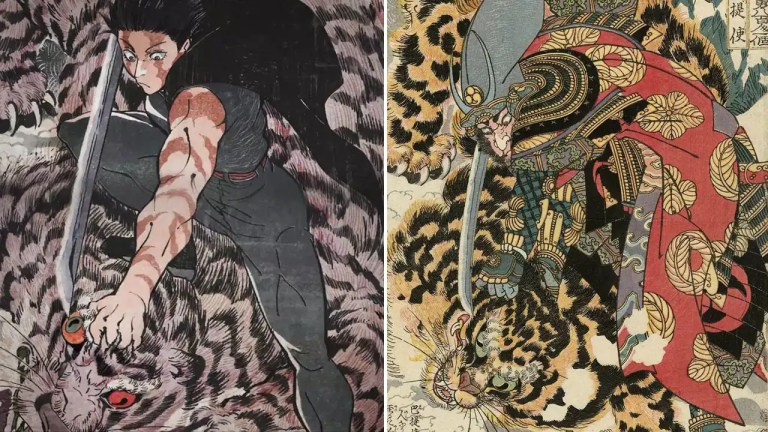
One of the opening sequences shows Maki Zenin positioned on a tiger, ready to strike down. This is a direct reference from Utagawa Kuniyoshi’s Kashiwade no Hanoshi, where she shows a man killing a tiger to exert vengeance for his dead child. The original Woodblock print portrays emotions like grief, rage, and an unyielding will face stronger opponents, which is a perfect parallel to Maki’s journey.
In the aspect of the painting, we can consider the tiger being the proxy, representing the oppressive tradition and inherited cruelty, going on in the Zenin clan for ages. Maki’s position shows her holding revenge in her eyes, along with physical strength and the willpower to refuse to bend over to power.
7. Morozumi Bungo-no-kami Masakiyo by Utagawa Kuniyoshi
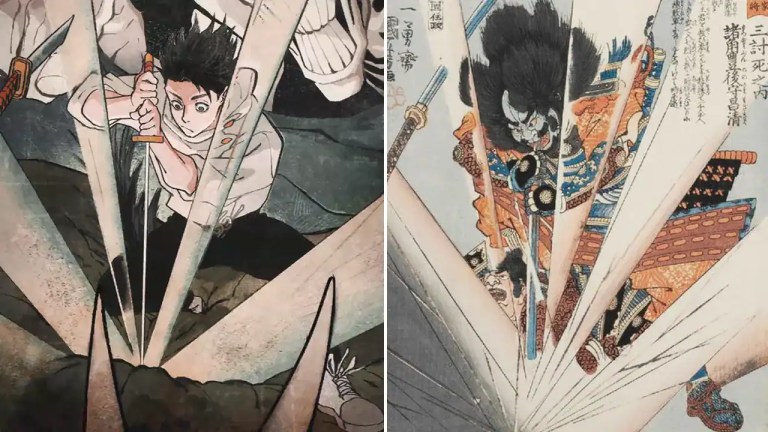
Alongside Maki Zenin’s appearance, we also have another Jujutsu sorcerer whose appearance has been inspired by another one of Utagawa Kuniyoshi’s artworks. While shown just for a few seconds, Yuta’s representation stood parallel to the woodblock print showing a lone warrior taking down a monstrous serpent. This perfectly represents Yuta’s characteristics, where he sees himself slaying something far larger than himself.
8. Ophelia by John Everett Millais
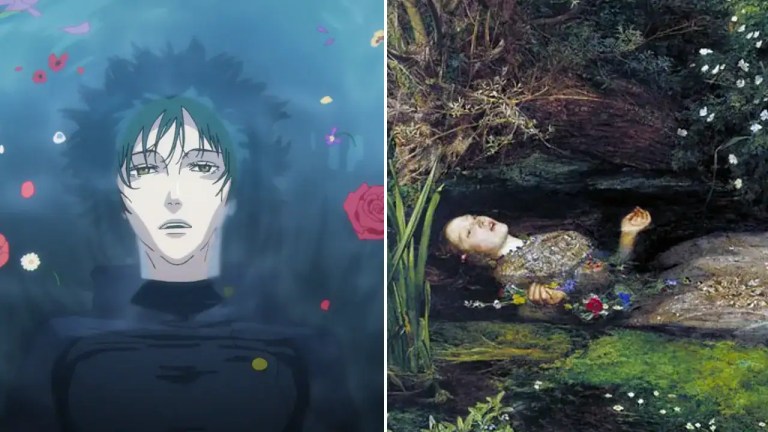
Millais’ Ophelia portrays passive surrender to death through his artwork. In the painting, floating bodies and downward motion echo this imagery. Jujustsu Kaisen portrayed this by using Maki Zenin, whose life story has made her surrender to fate, making a decision on the flow.
9. Mother with a Child in Her Arms by Käthe Kollwitz

Käthe Kollwitz’s painting stands as one of the visuals that is known for the emotions behind the art, rather than the visual spectacle. The scene revolves around the mother who has her child in her arms, with an expression of helplessness, as if she is aware that the world intends to take her son away. While fans may have their theories on who this art is based on, one thing is clear: there is no action, no amount of moment, indicating danger for this frame. Which, if you have followed JJK for a long time, makes you feel quite uncomfortable.
10. Dark Night Light Path / City by Tadanori Yokoo

Apart from characters, there is also a Y-shaped intersection that has been shown in the opening. This interesting framework is a visual pulled out from Tadanori Yokoo’s Y-Junctions series. While we have seen a theme of tragedies, battles, and resolutions in the previous art references, the theme for this is strangely ordinary. The original artwork was used as an act of nostalgia, showing old hometowns, familiar roads, which is what made it eye-catching for the JJK S3 opening.
This split Y-shaped rope is not just a travel route; it’s a route to uncertainty. In the Culling Games, there is no right path. Each route goes through hardships and losses, and the series reinforces this message through this scene in the opening.
Jujutsu Kaisen anime series is available to watch on Crunchyroll.

Aditya is an anime-fuelled copywriter who treats every blank page like the start of a new arc. He mixes fast hooks, sharp humor, and just enough drama to keep readers scrolling like it’s a binge session. Whether he’s crafting listicles or deep dives, he writes with the enthusiasm of someone who still believes the next episode will change everything.
Leave a Reply